Creating for Output Is Not the Same as Creating
I go to a painting class on Monday evenings, or, I'm supposed to.
For the past few weeks I haven't gone. I've been busy in the way that fills every minute of a day, with long hours, a stretch of learning new tools, and work that keeps spilling into the time I'd normally keep for myself. I also normally try to draw or write a little every day, even five minutes, and lately that's gone too.
The few times I have sat down to draw, it's felt like a chore, because I'm not “in” my personal creativity right now. The energy that usually goes there is going somewhere else.
That's fine for a stretch, and I'm not writing this to scold myself or anyone else into a better morning routine. But it's worth noticing, because the thing I've lost isn't creativity itself; I'm being creative all day, since the work I do is creative work.
The difference is what the creativity is for.
At work, I'm creating toward an outcome: a campaign that needs to perform, a client deliverable that has to convince a board, a strategy that has to hold up in a funder meeting. That's real creative work and I love it.
But it's not the same as the kind of creating I've stopped doing, the kind with no outcome attached to it at all. Drawing for five minutes isn't trying to produce anything; it's making something for the sake of making it, and that turns out to matter more than I tend to give it credit for.
I've started to wonder whether creative energy is finite, or at least whether it draws from one well.
When all of mine is going toward work that has to produce a result, there's not much left for the kind of creating that doesn't.
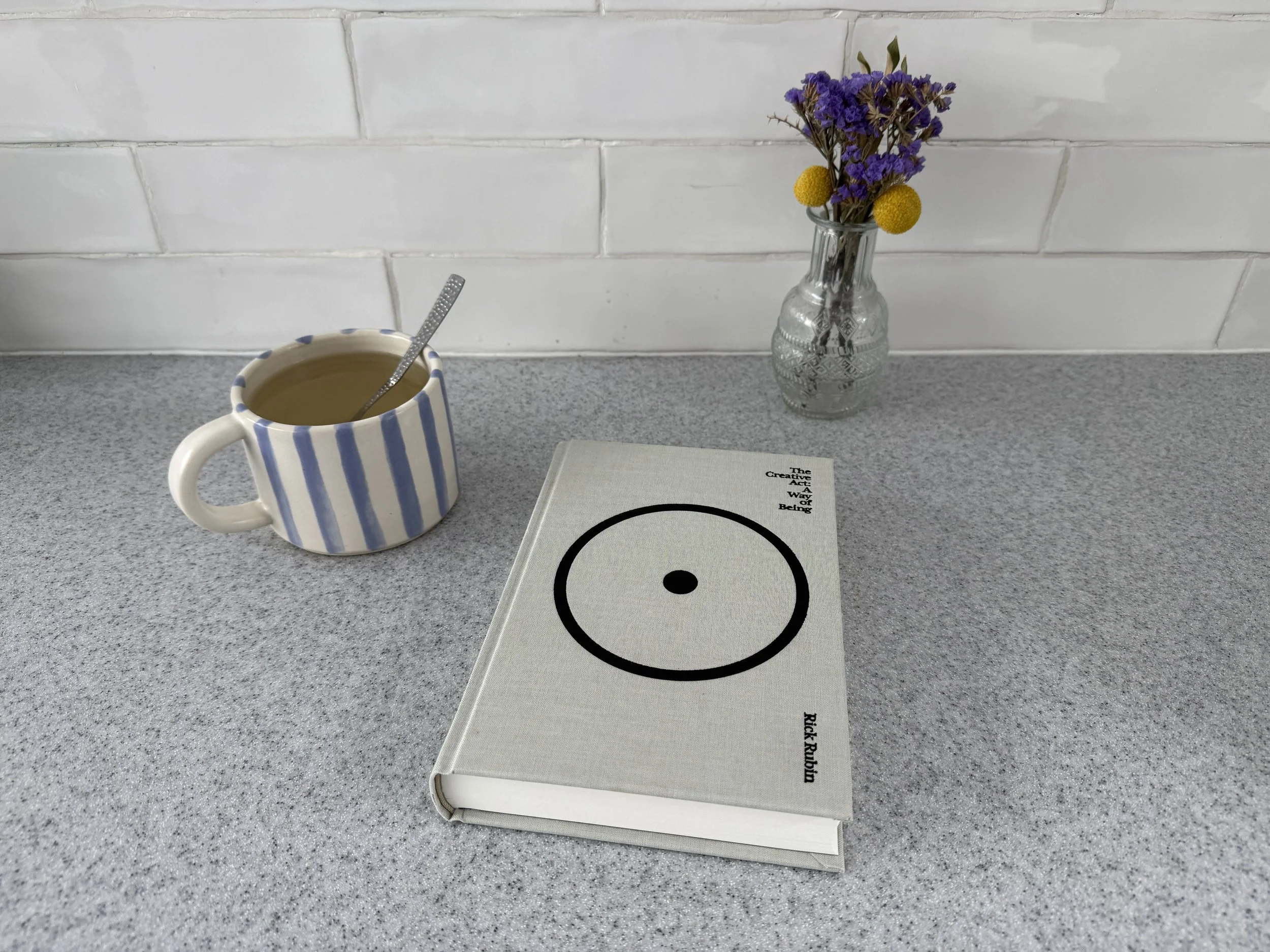
I'm reading Rick Rubin's The Creative Act right now, and he writes about staying connected to what he calls Source: the world around you, nature, the things that feed you before you've decided what they're for.
That's the part I've let go of these past weeks.
And I think that's where burnout begins, not with working too hard, but with cutting yourself off from the thing that refills the well while you keep drawing it down.
Why this isn't only a personal problem.
The impact sector runs on creating for output.
Almost everything a mission-driven team makes has to produce a result: the campaign has to convert, the donor report has to renew the grant, the deliverable has to satisfy the client, the social post has to reach the right people.
“The pressure to produce something that works is constant, and over time it strips the lightness out of the act of creating. ”
We're always making toward a result and rarely making for the pleasure of it, and that costs the work something.
I notice the cost most clearly in the work itself. When a team has been producing without any room to refill, the thinking gets flatter and the narrative gets safer. The fifth version of a campaign starts to sound like the first, because the people making it are running on the same depleted well and reaching for what's familiar, since nothing new is coming in.
The clarity and inventiveness that good communications depends on doesn't come out of exhausted people; it comes from people who have enough space to bring something of their own to the work.
The part I don't have a clean answer to.
Organizations have to run.
We can't all spend our days walking in nature waiting for inspiration to arrive, and a team that only ever creates for its own pleasure doesn't keep its clients or pay its people. The pressure to produce isn't a flaw in the system; it's the system working.
So the question isn't how to remove it but how to build organizations, and creative lives, that can hold the pressure to produce without consuming the well it depends on.
I don't think the answer is more discipline or a better-protected calendar, though those help. It starts with naming the tension out loud, which most of us never do at work. I'm going back to my Monday class this week, not because it'll make me more productive, but because I've watched what happens to the work, mine and my team's, when that part goes silent for too long.
I would love to hear your perspective.
This is the conversation we're holding on June 24th, in a roundtable we're calling The Creative Tension: an honest conversation in community about what creative practice gives us, what it costs us when we let it go, and what it would take to build organizations that make room for it.
If any of this resonated, come continue the conversation with us.
Join the roundtable here - hope to see you there!