Diagnose Your Communications Before You Spend Against It
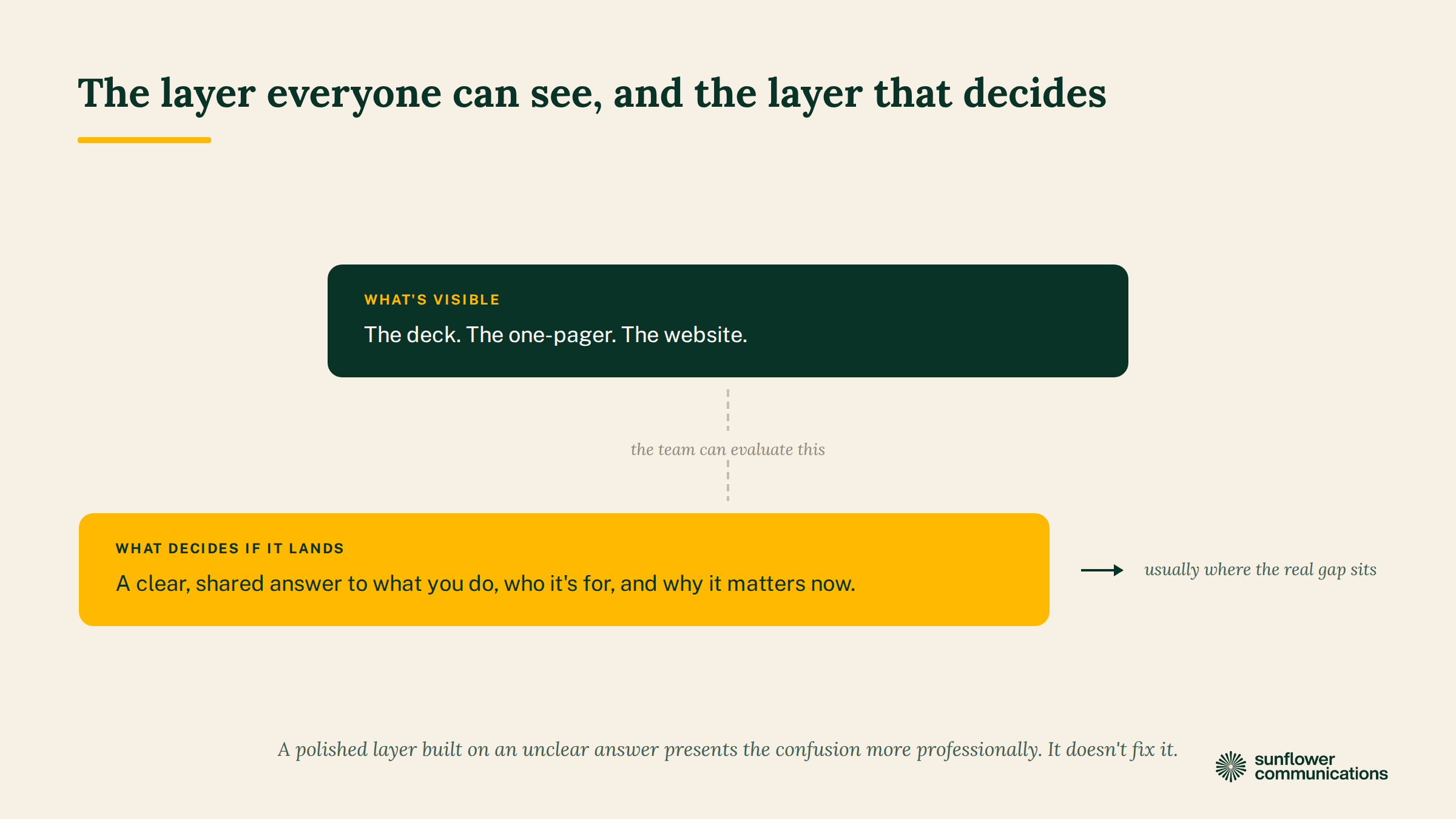
The funder meetings go well in the room. The program officer is engaged, the questions are good, everyone leaves saying how much they admire the work, and then the conversation goes stale. It happens twice, then a third time, and the team starts looking for what is wrong with the pitch. The deck feels dated, the one-pager is doing too much, the website has not been touched in three years. The plan that forms is a plan to fix the materials, and the budget follows the materials, because that is the part everyone can see.
The materials are not often the reason a funder does not move. What loses a funder usually sits one layer down, in whether the organization has a clear and shared answer to what it does, who it is for, and why it matters now. A polished deck built on an unclear answer does not fix the problem - it just presents the confusion more professionally.
Why the team keeps reaching for the visible layer
The layer underneath is the hardest thing to see about yourself. You have been living inside the story for years, so when you read your own deck, you supply the context the funder does not have. It reads as clear to you because you already know what it means, which is exactly why the team is the wrong judge of whether it is clear to someone hearing it cold. So the diagnosis defaults to what the team can evaluate, and the only part a team can evaluate about its own communications is the surface: the design, the copy, the channels. The result is a confident diagnosis of the one layer that is easiest to see and least likely to be the problem.
This is the gap between the quality of an organization's work and how the world understands it, and it is extremely difficult to catch from the inside. Not because the team is careless, but because being close to the mission is the thing that hides it.
Why this costs more now
A few years ago, this gap could stay buried, because polished materials were enough to signal credibility on their own. That has changed, and I have written separately about why. The short version is that AI has made polished output nearly free, so it is now very cheap to build a better-looking version of the same unclear message, and the pull to keep spending on the visible layer is stronger than it has ever been.
What an outside read changes
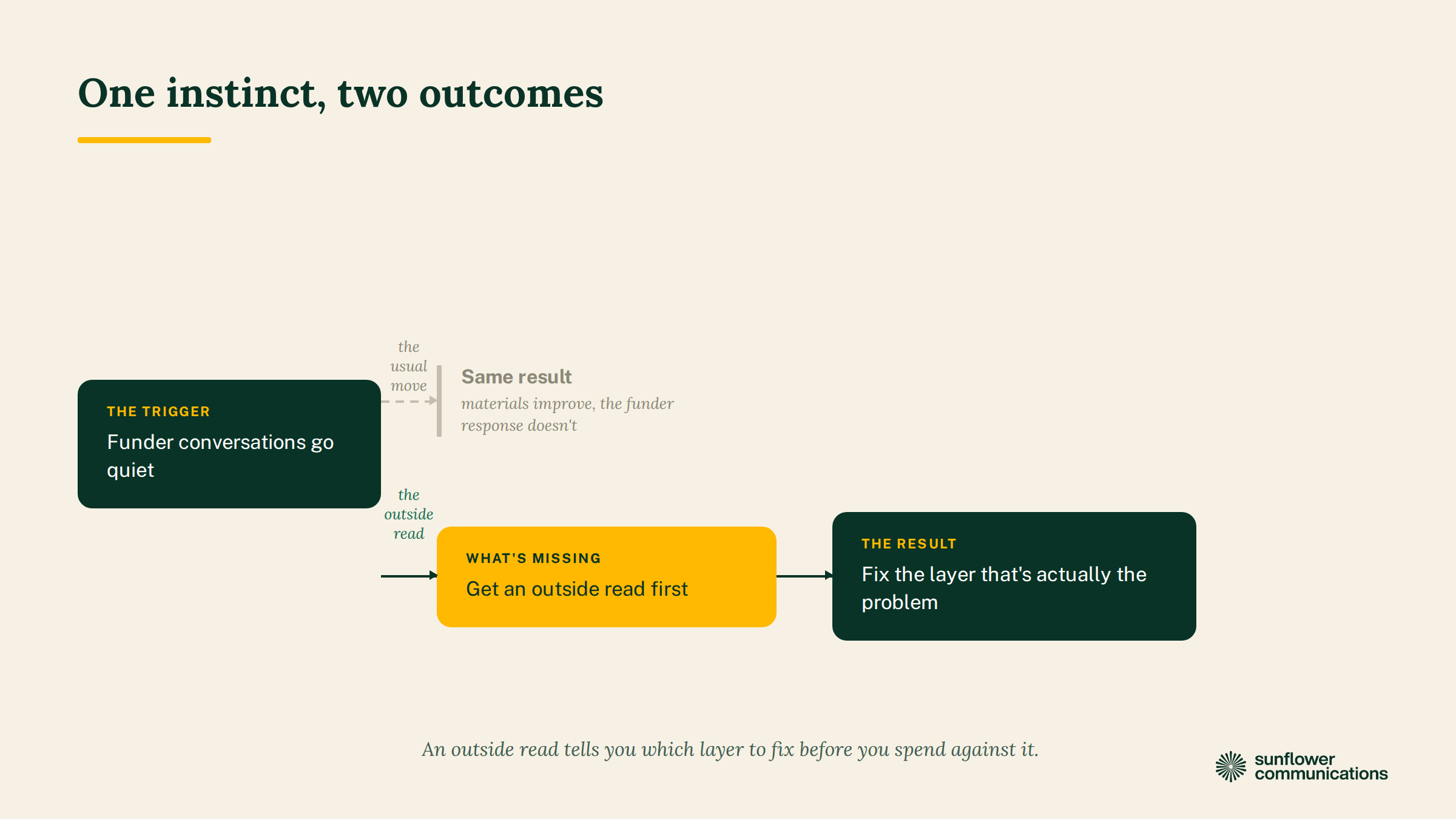
An outside read does one useful thing. It tells you which layer the problem lives in before you spend against it. If the materials really are the gap, you fix the materials and the funder conversations improve. If the answer underneath is unclear, no new deck is going to move the funder, and you find that out before the money is gone rather than after. The internal conversation changes too, because the debate stops being about taste, whether people like the deck or the design, and starts being about the real gap.
Most teams never get that read until after they have already spent. They refresh the deck, rebuild the website, run the campaign, and then notice a year later that the funder conversations still go quiet, with better-looking materials and the same result. The money is gone, and the original problem is still there.
A way to get the read first
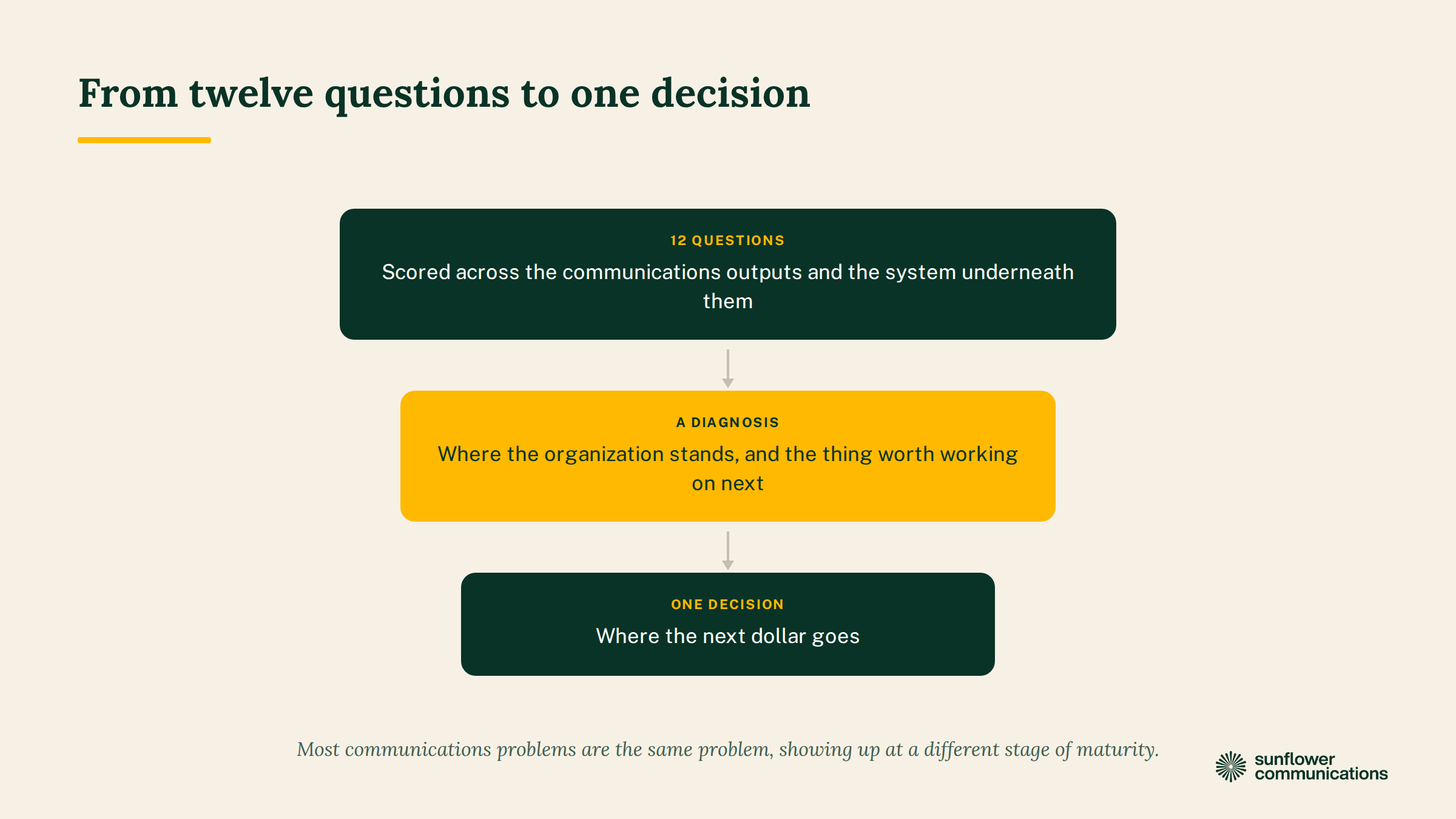
This is why we built the Impact Comms Diagnostic. It is twelve questions that give an organization the outside read it cannot give itself, scoring not only the communications outputs but the system underneath them, and it ends with a diagnosis: where the organization stands, and the thing worth working on next.
The result is not a grade. Most communications problems are the same problem showing up at different stages of maturity, and knowing which stage you are at is what tells you where to start, instead of spending against the most visible symptom first. It lets a team decide once where the next dollar goes, rather than relearning the same lesson a year later in a funder meeting that goes quiet again.
If the funder conversations have gone still and the instinct is to fix the deck, the deck may not be the thing. The diagnostic tells you where the gap is before you spend another dollar making the wrong layer look better.
Stay connected
If your funder conversations are not converting and you want to know which layer the problem lives in before you spend against it, the Impact Comms Diagnostic is the place to start.
Take the Impact Comms Diagnostic here, or if you would rather talk it through, book a call here or email me at nina@sunflower-communications.com.